zerofox logo
hero-bg

PII Removal + Doxxing Response

Automate PII discovery and removal across data brokers to reduce physical, fraud, and reputational risk.
PII Removal + Doxxing Response

Removal Without Context Is Just Cleanup

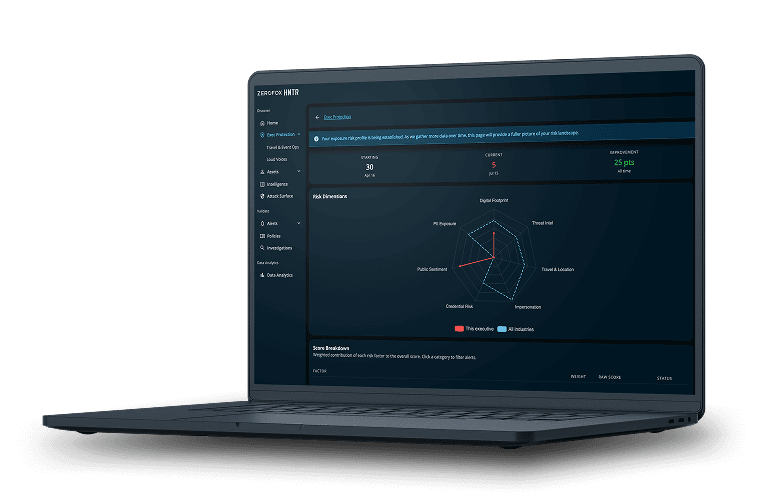
Standalone PII removal tools win on volume and breadth, but they stop at the removal request. They can't tell you whether the same address keeps resurfacing, whether a threat actor is actively circling the listing, or if it's worth escalating. ZeroFox pairs PII and credential removal with threat intelligence, so exposure connects to action instead of a checked box. 

Risk Should Beat First in Queue

M

US adults report having been doxxed at least once in their lifetime 1

average instances of exposed PII per executive across ~200 data broker and aggregator sites 2

US data compromises reported in 2025 3

ZeroFox PII Removal + Doxxing Response Solution

PII Removal + Doxxing Response is built for security programs that treat doxxing as a safety risk, not a privacy inconvenience. Automated services continuously find, remove, and re-check personal information across 500+ data broker sites globally, and flag the combinations of exposed data that attackers actually use to build a targeting profile.
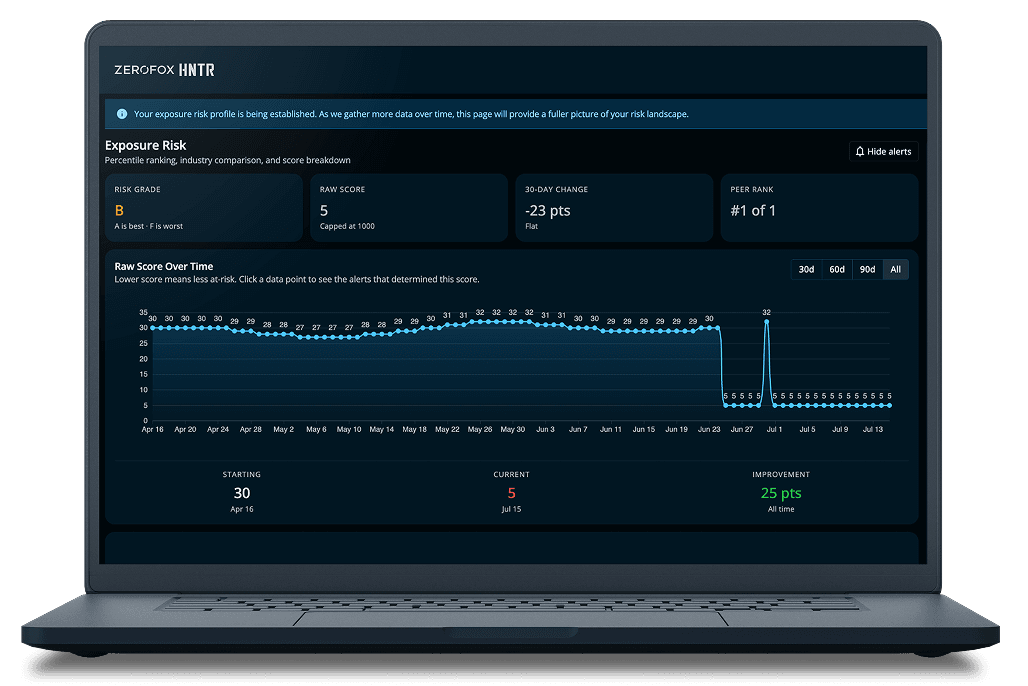
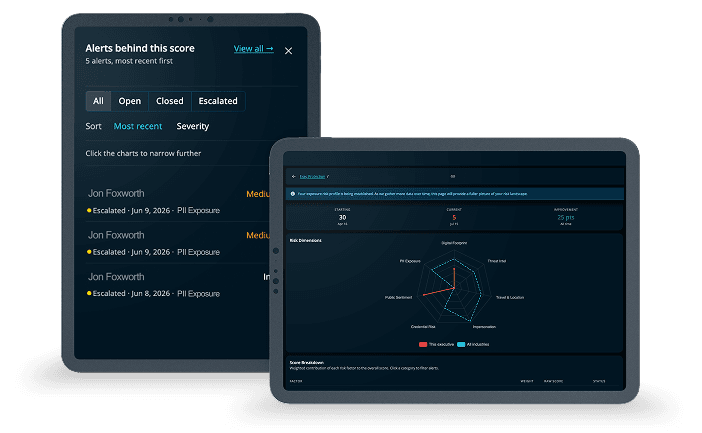
Know exactly which sites are listing a home address, phone number, or family details, even when the same listing is duplicated across multiple brokers.

The ZeroFox Advantage

hrs

saved annually from manual profile removal

+

profiles found across 66 sites for an average user

+

data brokers covered

ZeroFox PII + Doxxing Removal Functionality

Continuously scans 500+ data broker and people-search sites globally for personal information tied to protected individuals and their families.

Why ZeroFox Leads in PII Removal

validate_9

Built for Executive Protection

Reduces leadership targeting risk by pairing PII removal with broader executive threat monitoring and response workflows.

strike

Closes the Loop to Action

Exposure reduction connects directly to monitoring and response, so findings turn into protective steps, not extra tickets.
validate_2

Runs at Enterprise Scale

Corporate Security can apply consistent coverage across leadership and key roles without managing one-off requests.

Warning (1)

Designed for High-Stakes Incidents

When doxxing occurs, the program is set up to support rapid coordination across Security, EP, Legal, and Comms.

BLOG

PII Removal: Safeguarding Your Enterprise by Limiting Employee Personal Data Online

Learn how an online database compiled PII on at least 1,061 corporate executives and why data broker exposure can quickly become a safety risk. See what Corporate Security teams can do to keep leadership information harder to find.

Frequently Asked Questions

A data broker is a company that collects personally identifiable information (PII) from public records and other sources, then sells or publishes it as searchable “profiles.” These listings can include current and past addresses, phone numbers, relatives, age, and other identifying details that make targeting easier.
Corporate Security teams protecting people whose visibility or access increases organizational risk. This typically includes executives and board members, plus key employees with privileged access (Finance, IT, HR), and anyone facing elevated harassment or stalking risk due to role or public exposure.
ZeroFox scans data broker and people-search sites for listings that match approved identifiers tied to the individual being protected (for example name, known aliases, and other matching signals). When a match is found, it’s captured for review and removal workflow tracking.
It depends on the site. Some removals can happen in days, while others take weeks due to site-specific review steps and processing timelines. ZeroFox helps by submitting requests at scale, tracking status, and monitoring for re-listings so the data doesn’t quietly reappear.
Data brokers pull information from all over, other brokers, scraped websites, public records, and stitch it into a single profile for each person. Sometimes they stitch together two different people by mistake, and that error becomes part of what shows up when someone searches your name. We show you the record the site is actually surfacing, since that's what a threat actor would see too, and we cast a wide net on purpose, so a partial match or an inherited mistake doesn't slip through just because it's not a perfect one-to-one hit.
No tool finds everything, every time, and we're not going to claim otherwise. Gaps happen: bad or incomplete identifiers, a site that's briefly down, a new listing posted since our last scan, or a site that just won't show its hand. What continuous scanning does is close those gaps over time, instead of leaving you with a one-time snapshot that goes stale the moment something new gets posted.
  • [1] SafeHome.org. 2025 Doxxing Report. SafeHome.org, 2026
  • [2] Nisos. Executive Digital Exposure Trends: Understand and Reduce Your Risk. Arlington, VA: Nisos, 2025
  • [3] Identity Theft Resource Center. 2025 Annual Data Breach Report. San Diego, CA: Identity Theft Resource Center, 2026